


Equalising the age of consent
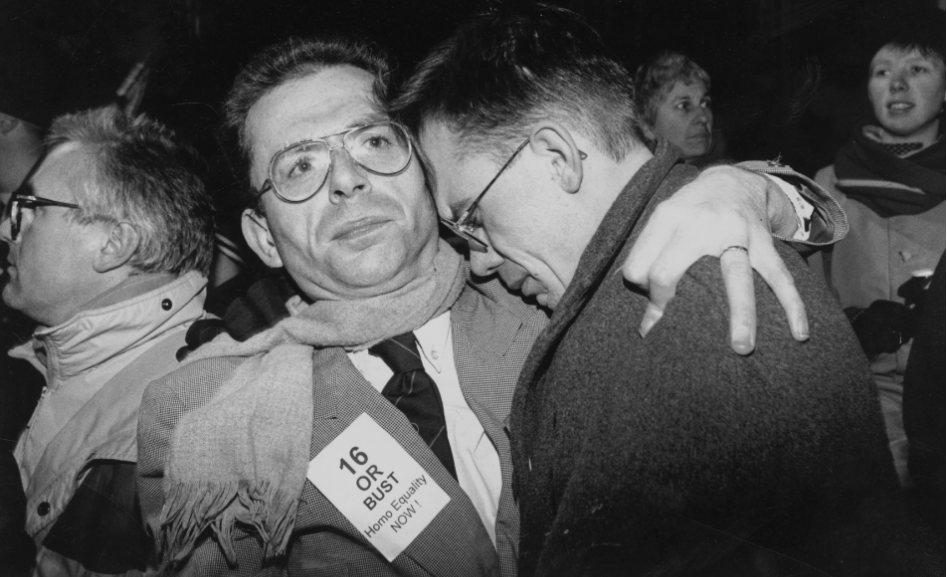
Until 2001, the age of consent for gay and bi men in England, Wales and Scotland was set higher than for everyone else. The age of consent for gay and bi men was set at 21, whereas for heterosexual sex it was set at 16.
Gay and bi men were criminalised for something heterosexual couples of the same age could do without consequence. This unequal law treated gay and bi men differently for something as basic as who they loved.
Equalising the law
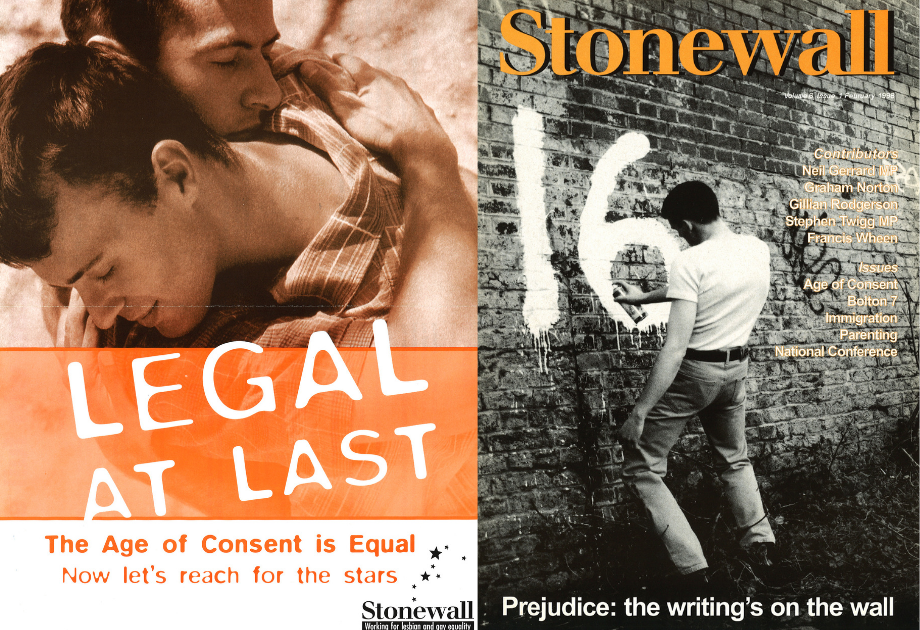
Stonewall started campaigning for the age of consent to be equal. In 1993, Stonewall challenged the European Court of Human Rights on reducing the age of consent.
It worked, but only partly. In 1994, The House of Commons voted to reduce the age of consent for gay and bi men to 18 – a step forward but still not true equality. There was disappointment that it was not lowered to 16 and so Stonewall continued the campaign.
In 1998 and 1999, the House of Commons voted to equalise the age of consent at 16 – both times, the House of Lords threw it out. It took a third attempt, and the use of the Parliament Act, to override the Lords' objection.
The reduction of the Age of Consent to 16 was then included in the Queen’s Speech and in 2001 the Sexual Offenses Amendment Act, which lowered the age of consent, came into effect.
Sex between women was never explicitly legislated against, which is why the act applied to men only.
This was a significant step forward on the road the LGBTQ+ equality and a reminder that setbacks don't mean defeat: they just mean we keep on trying.