


Equal marriage
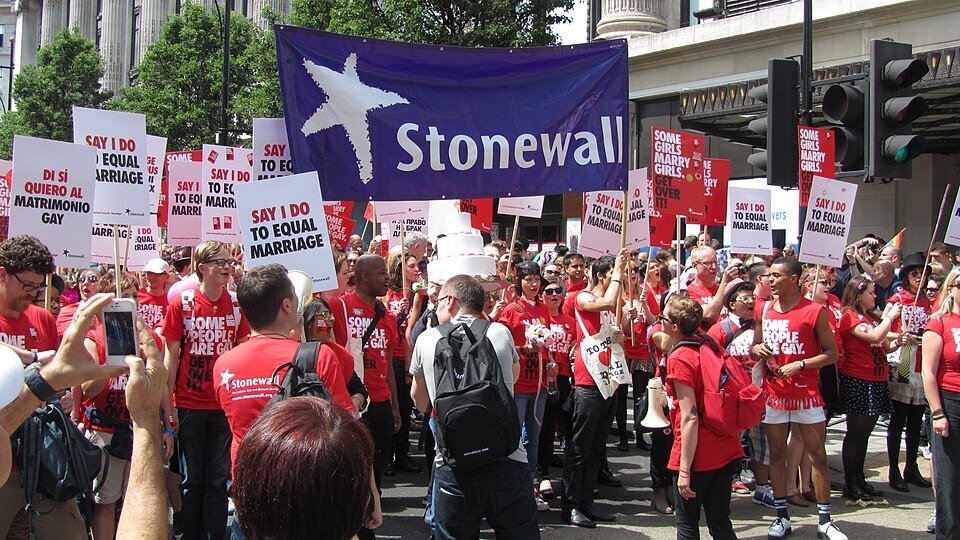
Until 2014, same-sex couples in England and Wales could not get married. Achieving equal marriage in the UK took time; it was a long process that succeeded because of decades of work, and incremental changes that led, eventually, to achieving equality.
To understand how we successfully achieved marriage equality, we have to look back at the Civil Partnership Act and how this came into force.
Civil Partnership Act
Same-sex partnerships were given legal recognition in 2004 with the Civil Partnership Act. This gave same-sex couples the same rights and responsibilities as married heterosexual couples in England, Scotland, Northern Ireland and Wales.
The Act marked a milestone moment which gave hundreds of gay and lesbian couples many of the same legal and civil rights as married heterosexuals. The first civil partnerships were registered in the UK in December 2005.
Legal recognition had been achieved; however, frustrations remained, and campaigns continued. Civil partnerships were a controversial victory as they could be seen as 'less' than marriage, representing a step towards but not into true equality.
Stonewall saw civil partnerships as a first step on the journey to full equality. Stonewall’s position was that securing civil partnerships would help build the cultural and political capital needed for eventually achieving equal marriage.
Legalising same-sex marriage
In 2010, Stonewall joined the campaign for equal marriage. One tactic was to conduct polling which demonstrated public support for the reform. This showed that four out of five people under 50 supported the move to equal marriage.
Stonewall also produced a legislative framework which detailed the steps needed to implement equal marriage. In 2012 the Government consulted on opening marriage to same-sex couples. In February 2013, MPs voted 400 to 175 in favour of the Marriage (Same Sex Couples) Bill at Second Reading.
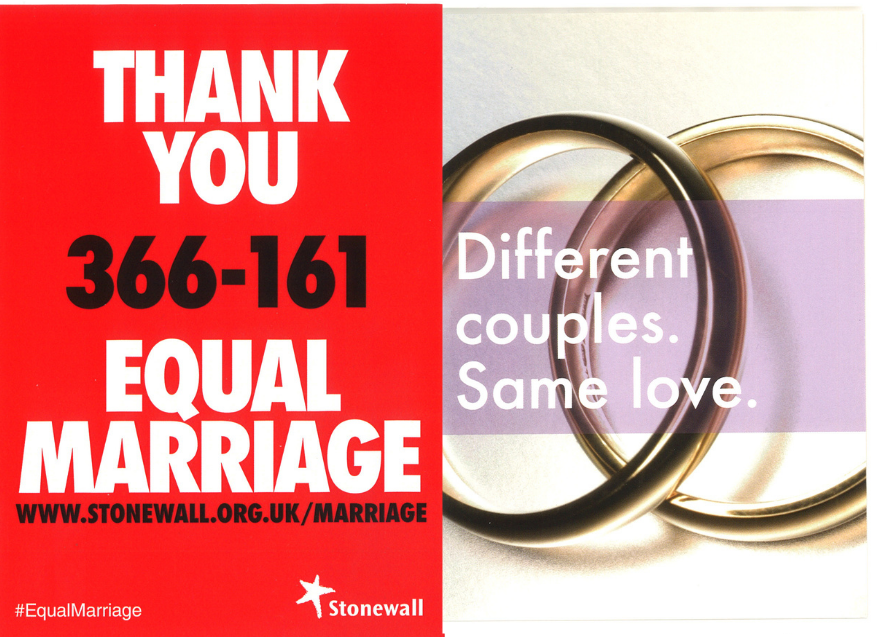
The Marriage (Same Sex Couples) Act received Royal Assent on 17 July 2013. The first same-sex marriages took place in England and Wales in March 2014.
The Scottish Government passed legislation allowing same-sex couples to marry in Scotland in 2014, and Northern Ireland joined the movement in 2019.
These changes were landmark victories for LGBTQ+ rights, and they represented more than just the right to marry – they represented recognition, dignity and equality.