Charlie Martin on identity, racing and Rainbow Laces
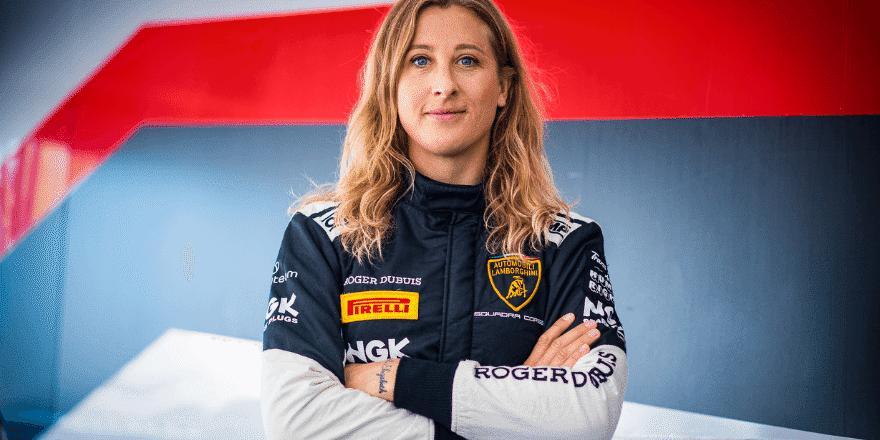
Racing Driver Charlie Martin has played a pivotal role in improving visibility and acceptance for LGBTQ+ people in Motorsports. To mark the start of the F1 season, she is opening up about her journey, and getting behind Rainbow Laces.
I suppose there are two levels to my story. One is my professional life in motorsport - a very male-dominated, macho environment where women make up a tiny percentage, let alone LGBTQ+ people. The second, is being trans and being out in that space has been incredibly challenging.
Coming out in motorsports
I’ve effectively come out twice in my career, although as any LGBTQ+ person knows, coming out is a never ending process. The first was when I transitioned while competing in club racing in 2012. At that level, back then, there was almost no awareness - no support from governing bodies or clubs, no guidance on how to support a LGB+ or trans person.
It wasn’t that people were unkind; it was more that nobody, including me, knew how to navigate it. It felt incredibly raw. Later in my career, once I was blending in more, I made a conscious choice to come out again - this time to create visibility and acceptance, to show why representation matters.
There was inevitable pushback: people saying why does this matter, or they didn’t care, or that all that mattered was whether you’re fast. But if you’re a straight, white, middle-class man, you’ve probably never had to consider what it’s like to be different.
A big part of coming out publicly was the belief that education had to happen, and that I could help drive it.
The importance of making belonging visible
Looking back at those early days, even something simple - a visible sign, like the Proud Pledge, that a motorsport club welcomed LGBTQ+ people - would have made a huge difference.
Now that Motorsport UK has done work with Stonewall, and thanks to internal efforts with their EDI Committee, that sort of visibility is emerging. But at the time, nothing like that existed.
I actually gave up racing for a year because I wasn’t sure I’d be accepted. Motorsport is my happy place; so much of my sense of belonging and identity is tied up in being in a race paddock. Feeling like I might not be welcome in that space was devastating.
Any small sign - a lanyard, a sticker, rainbow laces, a club saying they’d done inclusion training - would have made me feel less alone and more able to bridge that gap.
Challenging stereotypes
There was also the internal conflict of transitioning while doing something stereotypically masculine. Many trans women I’ve met since have been made to feel that, when you transition, you’re supposed to renounce interests associated with your former life. I felt that pressure too, but it never made sense - liking racing doesn't define my gender identity.
And ironically, if you’re a cis woman forging a path in motorsport, people applaud it. As a trans woman, even though motorsport is mixed-gender and I’m not at risk of being legislated out of my sport, I still feel the stigma. Opportunities for female drivers exist, but I sense that organisers worry they’d face backlash so even if I’m eligible, the climate around trans inclusion still affects me.
Accessing the benefits of sport and movement
Motorsport aside, sport and movement are a huge part of my everyday life. My partner, Sam, runs an inclusive gym in Brighton. Many of her members are LGBTQ+ or women, and she’s built an incredibly welcoming space.
The sense of community you get from places like that is powerful - seeing friends, feeling connected. We also surf together; I’ve surfed for about ten years and introduced her to it. We’ve spent time with the Queer Surf Club, which started just after the pandemic.
Surfing isn’t known for being especially inclusive, but bringing lots of LGBTQ+ people together who simply love the ocean created this beautiful community.
Sport is good for you physically and emotionally, but it’s also about the people you do it with.
Becoming a Racing Driver
My interest in racing grew bit by bit. A friend’s dad raced vintage cars, and I’d sometimes go away with them, camping at the track all weekend. I loved the atmosphere. Later, my friends and I got into car culture as we learned to drive.
But I always believed I couldn’t become a racing driver because I hadn’t karted from the age of 10. It felt like turning up to job interview at a law firm never having studied law. But then that same friend started racing at 19, and suddenly I thought, “Well, maybe I can do this too.”
That idea - not knowing something is possible until you see someone like you doing it - has shaped so much of my journey. And it’s one of the things that continues to motivate me.
I’ve met people who’ve said a video or interview of mine helped them in some way. Recently a Racing Driver I met who moved from the North America to London to escape the hostility in the US, told me she didn’t know anyone like her existed in motorsport until she found my story. We’ve become good friends.
That’s the power of being visible: you show others that it *is* possible to be yourself and still pursue the things you love.
For so long I thought I couldn’t be myself and be a racing driver. But seeing someone else do something you thought was impossible can change your life. If I can be that person for others, then it’s all worth it.
-
Rainbow Laces is a visible network of belonging across sport, exercise and everyday movement - it is a signal that those in the LGBTQ+ community are welcome.
For just £6 you can buy rainbow laces and make belonging visible.
Find out more about Rainbow Laces