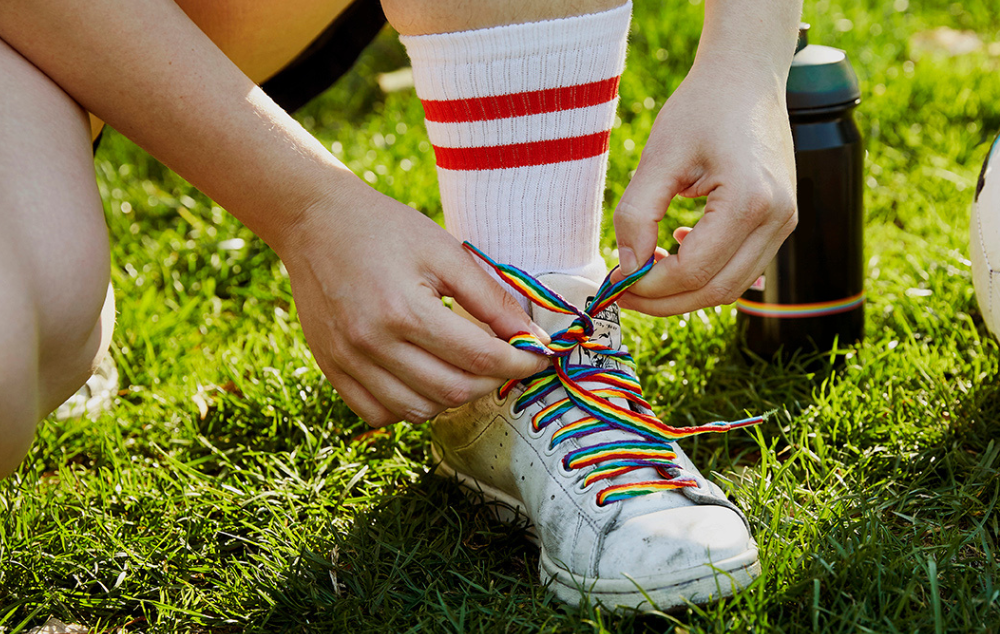
Rainbow Laces Day: New data reveals alarming levels of LGBTQ+ discrimination in sports
New data shows LGBTQ+ people are still hiding who they are to take part in sport, as we mark our first ever Rainbow Laces Day.
One in nine LGBTQ+ people in the UK (11%) avoid the gym, exercise classes or sports groups for fear of discrimination. Among trans+ people, the figure rises to almost three in ten (29%).
Simon Blake, Stonewall CEO said:
"All LGBTQ+ people should feel safe to exercise and to benefit from the boost to mental as well as physical health that sport provides. Sport should be one of the easiest places to belong: you turn up, you play, you cheer, you’re part of a team. But for too many LGBTQ+ people, it is still somewhere you check who is around before you let yourself relax. For trans+ people, the cost of taking part is higher still.
"Nobody should have to hide who they are. This Rainbow Laces Day, we are asking everyone in sport to take one action to make LGBTQ+ people feel safe and included, whether that's lacing up, speaking up, or showing up at a Rainbow Laces session and getting fit and active together."
This new data shows that sport remains one of the public spaces where LGBTQ+ people are most likely to face discrimination. It reveals that 15% of LGBTQ+ people who had been to a live sporting event, or watched sport in a bar, in the last year had experienced anti-LGBTQ+ discrimination there. Education settings had the same rate. Only faith services and places of worship were higher (19%).
Trans+ people were more likely to experience discrimination in every setting the survey asked about. Rates for trans+ people were highest in faith services (34%). Hospitality, exercise, live sport and education followed, at 26% each.
Stonewall also commissioned Bolt Insight to hold in-depth conversations with 20 LGBTQ+ people who play or follow sport. Participants described physical activity as vital to their wellbeing, both physical and mental. One 27-year-old man said moving his body regularly 'allows my mind to quiet down'. Many said that in mainstream settings, the price of taking part is hiding who they are.
One 59-year-old man joined a local men's football team that did not feel gay-friendly. He described putting 'on a more macho front', which left him feeling that he was 'lying to myself and others'. A 51-year-old football supporter said watching his team means 'having to hide a big part of what I am to watch the sport I enjoy’. Participants named women's football, parkrun and LGBTQ+ grassroots clubs as places that get inclusion right. Top-flight men's football was the place they felt had furthest to go. They were clear about what would make the biggest difference:
- anti-discrimination policies that are properly enforced
- simple ways to report abuse
- private changing facilities
- more visible LGBTQ+ role models, especially in elite men's sport.
They valued Rainbow Laces as a visible sign that LGBTQ+ people are welcome in sport. They also want clubs, governing bodies and brands to back that sign with action all year round. Many other clubs and organisations are backing Rainbow Laces Day, with planned activities including a colour walk with Rainbow Mind, a sunset walk along the Thames hosted by West London Queer Project and a Rainbow Laces themed hike from the Wee Gay Hike Club.