HIV progress and prevention
Hope and Progress on World AIDS Day
World AIDS Day is held every year on 1 December, and is a global movement to unite people in the fight against HIV and AIDS.
Since the beginning of the epidemic, an estimated 44.1 million people have died from HIV-related illnesses. Because sexual orientation has rarely been recorded in health or mortality data, there is no credible estimate of how many of those deaths were among gay men. However, what is well documented, is that the epidemic fell disproportionately on gay and bisexual men, particularly during a period when homosexuality was heavily stigmatised.
Since 1988, communities have stood together on World AIDS Day to show strength and solidarity against HIV stigma and to remember lives lost. World AIDS Day ensures we never forget those who came before, but this year carries renewed hope and reflection.
Landmark steps forward
In the UK, more than 105,000 people are living with HIV. In the 1980s and early 90s, most people with HIV were eventually diagnosed with AIDS. Now, thanks to modern antiretroviral treatment, very few people in the UK develop serious HIV-related illnesses. Medicine like Pre-Exposure Prophylaxis (PrEP), a drug taken by HIV-negative people before and after sex that prevents HIV transmission.
In 2020, oral PrEP was made freely available on the NHS, this moment was the result of years of campaigning, collaboration, and hard-won progress, a reminder that when communities, policymakers, and government work in partnership, lasting change is possible. Scientific breakthroughs don’t happen in a vacuum, they require investment, and investment often follows societal pressure for change.
In October 2025, the UK took another landmark step in the fight against HIV. The NHS approved the country’s first long-acting HIV prevention jab, cabotegravir, a simple injection that protects against HIV for two months at a time.
As Richard Angell OBE, Chief Executive of Terrence Higgins Trust, said:
Injectable PrEP will be transformative for our HIV response. It’s highly effective and acceptable for patients, and a vital tool for tackling inequalities.
PrEP is now routinely available across the country, and local authorities are being funded to ensure it reaches those who need it most.
Coalition of HIV charities help shape the government HIV Action Plan
Targets alone don’t eliminate inequality, and policy without support can fall flat. That’s why organisations like Terrence Higgins Trust, National AIDS Trust and the Elton John AIDS Foundation have been essential, helping to shape the HIV Action Plan, incorporate the voices and experiences of people living with or affected by HIV, and keep the government on track as it works towards the 2030 goal.
The 2024 Getting on Track report warns that while progress is encouraging, “we are not currently on track to end new HIV cases by 2030.” Read more about their calls for the new HIV Action Plan for England.
Change happens when we work together
Coalition-building is about compromise, connection and collaboration. It ensures government decisions reflect the realities of those most affected, consider voices with lived experience and are guided by experts.
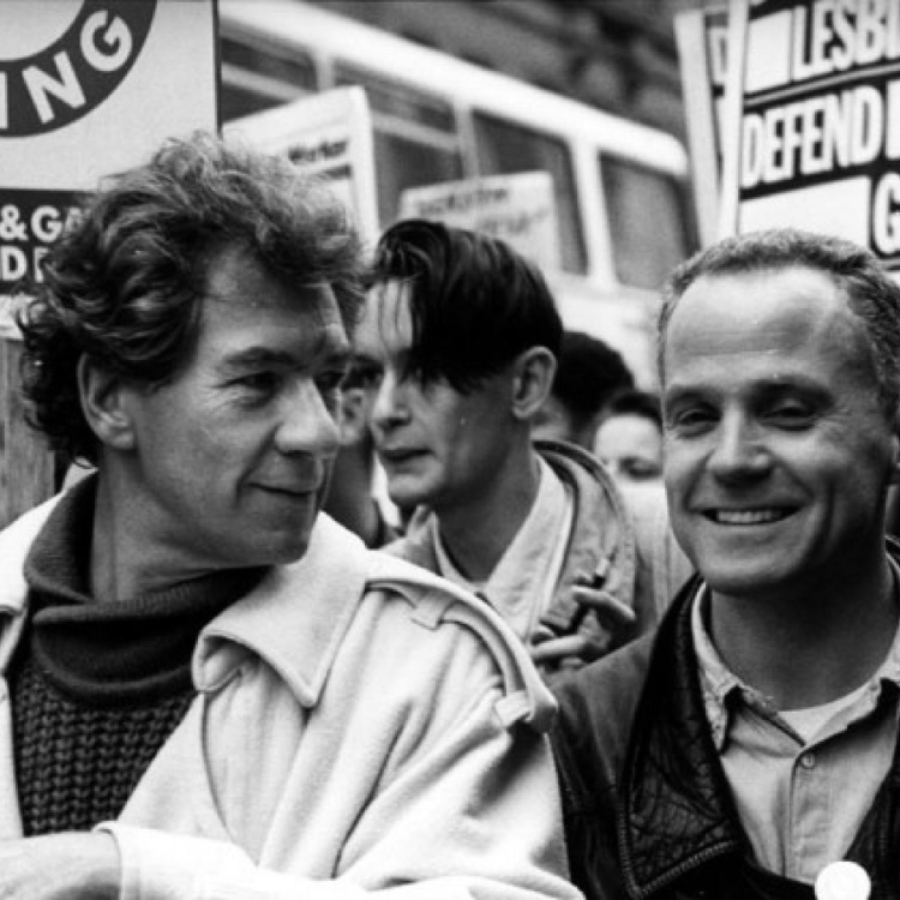
Before the AIDS crisis, lesbians and gay men often worked in separate spaces, with limited collaboration. In the earliest days of the AIDS epidemic it was lesbians who loudly supported gay men – advocating for change, offering support and perhaps vitally providing care as the epidemic swept through the community. As Lisa Power, one of Stonewall’s founders, states, we need to work together. She recalls, “The 80s is a story of lesbians basically kicking the door down on gay men’s organisations and saying, ‘Hello, you’re going to share’ these spaces with us. The resultant banding together of the queer community showed how important it is to work together. “I think most queer people now recognise that we’re much stronger together than apart.”
Now, just like in the 80s it is vital that LGBTQ+ communities work together to continue to drive progress on tackling HIV and promoting LGBTQ+ rights and freedoms.
Continue to push for progress
In the UK, we are already diagnosing over 90% of people living with HIV. Reaching zero new transmissions by 2030 is, therefore, within sight. Reaching this milestone would make the UK the first nation in the world to do so.
The new injectable treatments are a prevention tool, not a cure. Unlike vaccines, they do not provide lifelong immunity, but rather prevent the virus from taking hold. While an HIV vaccine remains a work in progress, long-acting prevention injections mark a major step forward, paving the way for destigmatisation and equal access.
The Red Ribbon
The red ribbon is the international symbol for HIV awareness and support for people living with HIV. This World AIDS Day buy a red ribbon from The National AIDS Trust and/or Terrence Higgins Trust and support their mission to create a future where there are no new cases of HIV, where people living with HIV receive the support they need, and where good sexual health is a reality for all.
Simon Blake OBE, Chief Executive of Stonewall
Great advances have been made since the dark early days of the epidemic, which cast a long shadow over the community. As a young gay man and a gay men’s outreach worker this was both personal and professional. I remember the fear, sadness and uncertainty of those times only too well. So, this World AIDS Day, while we honour the millions of lives taken too soon and the progress made and take a stand against stigma and emphasise the importance of remaining on track to end new transmissions in each of the four nations across the UK by 2030.
We also recognise the urgency of the situation globally and urge those with the power to influence funding for prevention, treatment and support to do all they can to ensure we do not go backwards. The consequences of doing so are devastating.Please use your voice and wear a red ribbon to demonstrate solidarity, and, if you can, donate to one of the brilliant HIV charities doing life changing work.